
Deva Racing: Exclusive - Liquidators instructed and police to review reports
Ryan Tongue yet to comment after claims of oversold shares and unpaid prize money

A major racehorse syndicate is set to go into liquidation after being barred from having runners in Britain.
Police will also review reports submitted to officers by members of Deva Racing’s various ownership groups.
Deva director Ryan Tongue has not responded to allegations which emerged last month of racehorse shares being over-sold, unpaid prize money and overdue training fees.
An automated reply from his official Deva Racing email account said that due to a "serious medical issue" he was signed off by his GP and unable to respond to emails. "This inbox is not being monitored," it added.
Now insolvency practitioners from corporate restructuring firm Leonard Curtis have been appointed to deal with Deva’s affairs.
“Leonard Curtis has been instructed by the director of the Deva Racing Group Ltd to place the company into liquidation,” a spokesperson told me.
“Leonard Curtis is currently gathering the relevant information to allow it to prepare the required notices and report which will be circulated to creditors in due course.
“Any creditors who want to raise any concerns directly with Leonard Curtis should email creditors.birmingham@leonardcurtis.co.uk or call 01905 677490.”
Leonard Curtis, which has an office in Worcester, says it has over 30 years of experience, and more than 350 employees, and “draws on a range of services including restructuring, insolvency, funding, legal, business services”.
If a company goes into liquidation, it effectively means the business has ended and assets will be assessed to see what might be available to benefit any creditors.
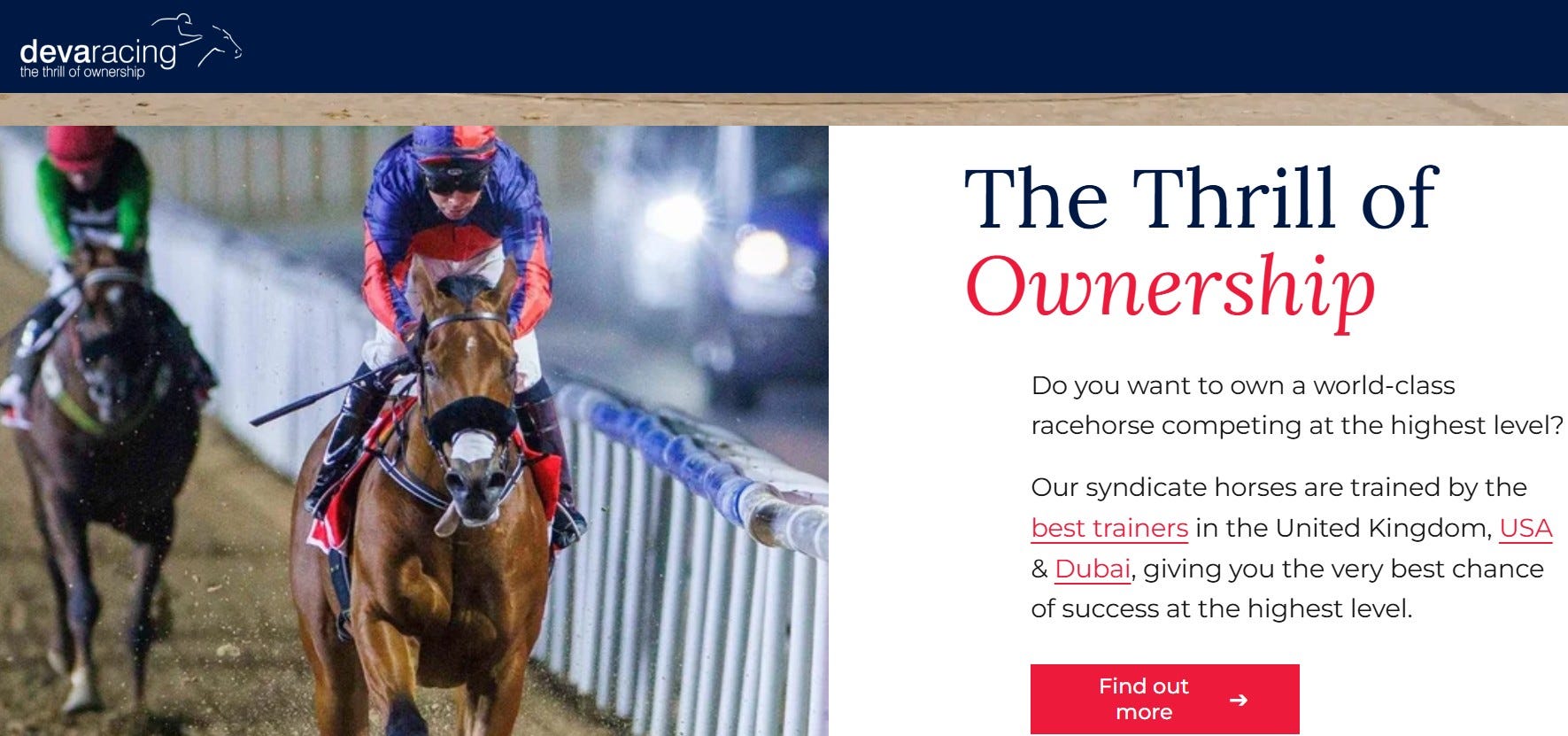
Deva Racing’s registered address is in Worcester. Its accounts are overdue at Companies House. And now local police are involved.
When asked if it is investigating any allegations, a West Mercia Police spokesperson said: “We can confirm that we have received reports in relation to this matter and they are being reviewed."
This means police are aware of concerns but it does not mean the force has started a formal investigation at this stage. Police do not confirm or deny the identity of anyone who may be subject to investigation or the review of reports received.
Deva’s website, which has been shut down in recent days, listed details of its horses which were stabled with some of the sport’s leading trainers, including Wesley Ward, James Owen, Olly Murphy and Ian Williams, along with Hugo Palmer who is based at Manor House Stables, owned by Michael Owen.
Former England footballer Owen has a 50% share himself in Confernation, a promising two-year-old still in training - but like all Deva horses - banned from running in Britain.
What are racing’s rulers doing?
The British Horseracing Authority (BHA) issued a statement on 23 July, confirming it had barred entries, after the allegations against Deva first surfaced on the Nick Luck Daily Podcast.
Syndicate member Tom Walton told the podcast that money earned by Imperial Emperor (around £440,000) for finishing fourth in the Dubai World Cup effort had not been paid.
It is not clear exactly how many shares were sold in Imperial Emperor - who was trained for Deva by Bhupat Seemar in Dubai - amid claims it was over 100%. Ryan Tongue has been unavailable to respond to this or any of the allegations.
The BHA statement last month said: “We can confirm that the BHA has put a stop on entries and declarations being made for Deva Racing Syndicate horses trained in Britain. We encourage any concerned syndicate members to contact the BHA on intel@britishhorseracing.com.
“We will be making no further comment regarding this matter at this time.”
Syndicates ‘continue to grow’
Trainer James Owen told the Racing Post in July that the Deva Racing case was “horrible” and added: “It’s turned into a messy situation for quite a few trainers in Britain, and it’s a real shame.
“We have a lot of syndicates in our yard and they’re very successful, so it’s disappointing this has happened. It’s not a great look and hopefully it was a one-off and everyone gets what’s due, from the trainers to the staff to the syndicate members.
“However, it doesn’t tarnish my other syndicates that are run very well by honest people and continue to grow.”
Training racehorses is an expensive and competitive business and syndicates have been seen as a way to provide a decent income for trainers and a more affordable way into the sport for owners.
Rather than, say, having to pay £50,000 outright to own a horse, a syndicate member could take a 5% share for £2,500 - as well as paying a share of the training fees - and have the right to attend races as an owner and share in any prize money.
There are 3,019 syndicates in Britain, according to the BHA, which introduced a licence for syndicates and racing club managers in 2024 designed to “further strengthen the regulation of shared ownership”.
Every syndicate or club manager was required to have a valid licence in place by January 1 this year. The BHA said it allows them to “evaluate applications more thoroughly” and assess key areas such as business competence.
Many syndicate members would not expect to make huge sums in profit, but Imperial Emperor looked an unusual tale for Deva shareholders.
Imperial Emperor won the Al Maktoum Challenge at Meydan in January before finishing fourth in the Dubai World Cup in March.
The horse has won more than £1 million in prize money on his last three runs.
It appeared to be a fairytale story. The final chapter is yet to be written.